

ISO 45001 OCCUPATIONAL HEALTH & SAFETY MANAGEMENT SYSTEM (OHSMS)
An ISO 45001 Certification provides an internationally recognized operational framework designed to systematically manage workplace health, reduce occupational hazards, and prevent work-related injuries or illnesses. By establishing a structured Occupational Health and Safety Management System (OH&SMS), organizations transform their core operating environments into proactive, safety-first environments. Achieving an ISO 45001 Certification demonstrates strict adherence to global regulatory compliance while enhancing workforce productivity and operational efficiency.
Through seamless alignment with the High-Level Structure (HLS) common to modern management system standards, this framework easily integrates alongside existing business operations. Securing an ISO 45001 Certification serves as a strategic business asset that strengthens stakeholder confidence, minimizes costly insurance claims, and builds long-term operational resilience across complex corporate structures.
- Core Purpose: Establishing a comprehensive framework for hazard identification, risk assessment, and operational safety controls across workplaces.
- Global Benchmark: Replacing legacy standards like OHSAS 18001 to provide a proactive risk-prevention mindset integrated into top leadership decision-making.
- Target Audience: Applicable to enterprises of any size, scale, or sector seeking to safeguard human capital and maintain seamless legal compliance.
- Operational Impact: Substantially lowers workplace incidents, reduces downtime costs, and elevates organizational reputational standing during commercial bidding.
What Is ISO 45001 Certification and Why Does It Matter?
An ISO 45001 Certification provides an internationally recognized operational framework designed to systematically manage workplace health, reduce occupational hazards, and prevent work-related injuries or illnesses. By establishing a structured Occupational Health and Safety Management System (OH&SMS), organizations transform their core operating environments into proactive, safety-first environments. Achieving an ISO 45001 Certification demonstrates strict adherence to global regulatory compliance while enhancing workforce productivity and operational efficiency.
Through seamless alignment with the High-Level Structure (HLS) common to modern management system standards, this framework easily integrates alongside existing business operations. Securing an ISO 45001 Certification serves as a strategic business asset that strengthens stakeholder confidence, minimizes costly insurance claims, and builds long-term operational resilience across complex corporate structures.
- Core Purpose: Establishing a comprehensive framework for hazard identification, risk assessment, and operational safety controls across workplaces.
- Global Benchmark: Replacing legacy standards like OHSAS 18001 to provide a proactive risk-prevention mindset integrated into top leadership decision-making.
- Target Audience: Applicable to enterprises of any size, scale, or sector seeking to safeguard human capital and maintain seamless legal compliance.
- Operational Impact: Substantially lowers workplace incidents, reduces downtime costs, and elevates organizational reputational standing during commercial bidding.
What Key Requirements Drive a Successful Safety Framework?
Implementing a compliant Occupational Health and Safety Management System requires a comprehensive approach structured around seven foundational pillars:
- Organizational Context: Determining internal and external factors influencing safety goals while analyzing worker needs and regulatory requirements.
- Leadership Engagement: Ensuring top executives take direct accountability for safety results, system integration, and resource provisioning.
- Proactive Planning: Conducting detailed hazard identification, risk evaluations, and establishing measurable safety objectives.
- Support Infrastructure: Allocating proper budget, competent personnel, continuous training, and robust internal communications.
- Operational Controls: Implementing documented procedures, emergency response protocols, and contractor safety management.
- Performance Evaluation: Executing systematic internal audits, regulatory reviews, and data monitoring to track performance indicators.
- Continual Improvement: Applying corrective actions to address non-conformances and driving ongoing system optimization.
What Strategic Advantages Do Certified Organizations Gain?
Organizations holding valid certification experience immediate operational improvements alongside long-term market advantages. Beyond fulfilling baseline ethical responsibilities, certified entities unlock significant financial and strategic benefits:
- Reduced Incident Expenses: Fewer workplace injuries lower worker compensation claims, reduce legal exposure, and decrease operational downtime.
- Lower Insurance Premiums: Insurers regularly offer lower policy rates to certified businesses that systematically document hazard mitigation.
- Regulatory Peace of Mind: Structured compliance monitoring limits the risk of regulatory fines or operational shutdown orders.
- Enhanced Commercial Credibility: Having an independently verified safety system grants a competitive edge during public and private contract tenders.
How Does GIC International Certifications Facilitate Fast and Smooth Certification Services?
GIC International Certifications delivers streamlined, highly efficient standard assessment services designed to evaluate organizational conformity without causing unnecessary delays. By deploying experienced, professionally accredited lead auditors, GIC International Certifications evaluates complex operational systems against international standards with clarity and speed.
GIC International Certifications maintains a track record of supporting 100% successful achievement outcomes across all client evaluation scopes by deploying structured evaluation frameworks and straightforward audit logistics.
| Standard Audit Phase | Operational Execution by GIC International Certifications | Key Project Result |
| Initial Assessment & Scope Definition | Evaluates enterprise boundaries, operational complexities, site locations, and regulatory baselines. | Clear definition of formal audit scope and operational boundaries. |
| Stage 1 Document & System Review | Conducts comprehensive desk audits of system documentation, policies, and readiness indicators. | Early identification of system gaps prior to full operational site audits. |
| Stage 2 On-Site Verification | Deploys expert accredited lead auditors to evaluate physical controls, staff knowledge, and operational implementation. | Formal evidence collection confirming system compliance. |
| Audit Synthesis & Technical Review | Analyzes audit findings through impartial technical panels to confirm standardized reporting. | Objective validation of standard compliance. |
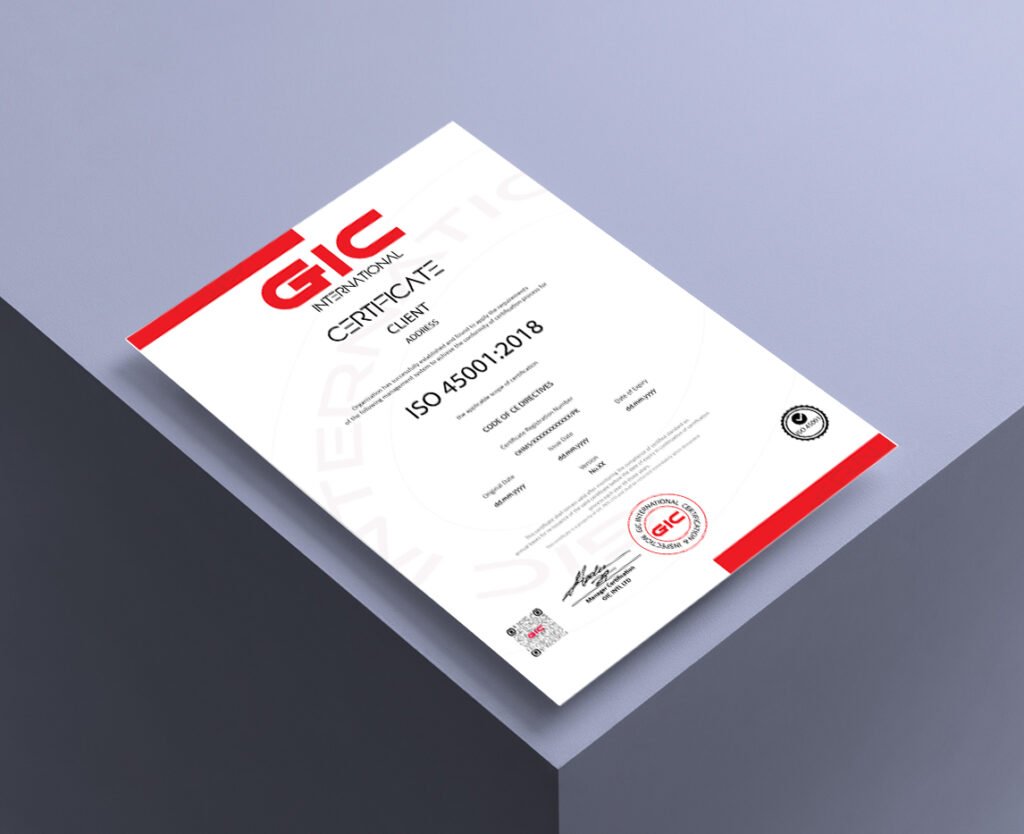
| Formal Certification Issuance | Issues globally recognized certificates backed by leading accreditation bodies. | Full compliance status achieved with maximum market credibility. |
| Surveillance & Continual Review | Plans structured annual surveillance evaluations to maintain system health over the three-year cycle. | Sustained alignment with evolving standards and continuous compliance. |
What Is the Estimated Project Timeline and Investment Structure?
Achieving certification requires a clear, predictable roadmap tailored to enterprise size, operational risk profiles, and employee headcounts. Below is a tentative framework outlining project timelines and cost allocations, structured to remain highly economical relative to market trends.
Note: The figures below are estimated projections for planning purposes and do not represent final or exact pricing.
| Enterprise Scale | Primary Operational Profile | Estimated Timeline | Tentative Investment Allocation (PKR) |
| Small Enterprises (1 to 25 Staff) | Single site, low-to-medium hazard density | 2 to 4 Weeks | PKR 150,000 to PKR 250,000 |
| Medium Enterprises (26 to 150 Staff) | Multi-department, moderate operational complexity | 4 to 8 Weeks | PKR 260,000 to PKR 450,000 |
| Large Scale Enterprises (151 to 500 Staff) | Multi-site operations, complex supply chains | 8 to 12 Weeks | PKR 460,000 to PKR 750,000 |
| Major Industrial Enterprises (500+ Staff) | Global sites, heavy industrial high-hazard profiles | 12 to 16 Weeks | Custom Economical Proposal |
What Sector-Specific Expertise Does GIC International Certifications Offer?
The evaluation of safety management systems requires deep sector-specific insight. GIC International Certifications deploys senior lead auditors who possess deep domain knowledge, supporting broad audit scopes across demanding technical sectors:
- Construction: Verification of high-risk work controls, site safety protocols, scaffolding regulations, heavy equipment operations, and subcontractor safety tracking.
- Pharmaceuticals: Assessment of cleanroom occupational health, active chemical exposure handling, biosafety controls, and specialized facility safety systems.
- Shipping Lines & Maritime Logistics: Evaluation of vessel safety protocols, port cargo handling procedures, crew welfare management, and international maritime safety alignments.
- Power Generation & Utilities: Comprehensive auditing of high-voltage electrical safety, thermal plant hazards, lock-out/tag-out procedures, and facility emergency plans.
- Hospitals & Healthcare Networks: Assessment of biological hazard controls, clinical needle-stick prevention, radiation safety, worker fatigue protocols, and emergency facility management.
- Engineering Projects: Auditing complex industrial design installations, heavy fabrication safety, pressure vessel testing, and technical risk containment measures.
FAQ’s
What is the validity period of an ISO 45001 certificate?
An ISO 45001 Certification remains valid for three years from the date of formal issuance. Maintaining active certification status requires completing annual surveillance audits to confirm ongoing compliance, followed by a formal recertification audit prior to the three-year expiration.
Can ISO 45001 be integrated with other management standards?
Yes, the standard shares a common High-Level Structure (HLS) with ISO 9001 (Quality Management) and ISO 14001 (Environmental Management). This design allows organizations to combine documentation, internal audits, and external evaluations into a unified integrated management system.
What is the main difference between OHSAS 18001 and ISO 45001?
While OHSAS 18001 focused primarily on managing internal health and safety risks, ISO 45001 emphasizes the organization’s broader operating context, top management leadership accountability, and worker participation at all levels. ISO 45001 also adopts a preventative risk-based model rather than relying mainly on corrective actions after incidents.
How long does the entire audit process take from start to finish?
The duration depends on organization size, complexity, hazard risk level, and existing system readiness. For small to medium-sized organizations, the formal audit process can be completed within two to eight weeks under streamlined audit schedules.