

GMP – Good Manufacturing Practice
Good Manufacturing Practice or GMP Certification represents a globally validated operational mechanism created to ensure products are consistently produced, controlled, and monitored according to international quality baseline metrics. Designed to drastically minimize cross-contamination, mislabeling, batch variability, and operational failures during manufacturing, this certification protocol governs end-to-end production environments. Achieving compliance guarantees that a facility operates within verified guidelines, protecting consumers while solidifying global trust.
Securing a GMP Certification is a fundamental requirement for commercial organizations operating within sectors such as pharmaceuticals, nutraceuticals, food and beverage processing, cosmetics, and medical device assembly. Beyond regulatory compliance, attaining this standard confirms operational integrity across facilities, machinery, staff hygiene, and supply-chain logistics. Organizations verified under these protocols validate their commitment to safety, market readiness, and zero-defect production standards.
- Core Definition: Standardized, quality-centric system ensuring products strictly match regulated safety parameters.
- Governing Pillars: Facilities & Equipment, Personnel Hygiene, Material Control, Standard Documentation, and Quality Management Systems.
- Primary Scope: Pharmaceuticals, Food Safety, Medical Equipment, Cosmetics, and Dietary Supplements.
- Key Benefits: Unlocks international market export potential, reduces batch failures, prevents costly product recalls, and secures consumer trust.
Why Is GMP Certification Vital for Sustainable Business Operations?
Manufacturing failures carry immense financial and legal costs. A single compromised batch can damage brand reputation and result in severe regulatory penalties. Compliance with Good Manufacturing Practice mitigates these vulnerabilities by embedding quality control directly into every stage of the manufacturing process, rather than relying solely on post-production batch testing.
Organized compliance protocols establish a framework that enforces hygiene standards, facility cleanliness, accurate record-keeping, calibrated instrumentation, and routine process validations. When a facility maintains valid certification, it signals to international buyers, regulators, and consumers that the company operates at peak procedural efficiency.
How Does GIC International Certifications Facilitate Fast and Seamless Audit Execution?
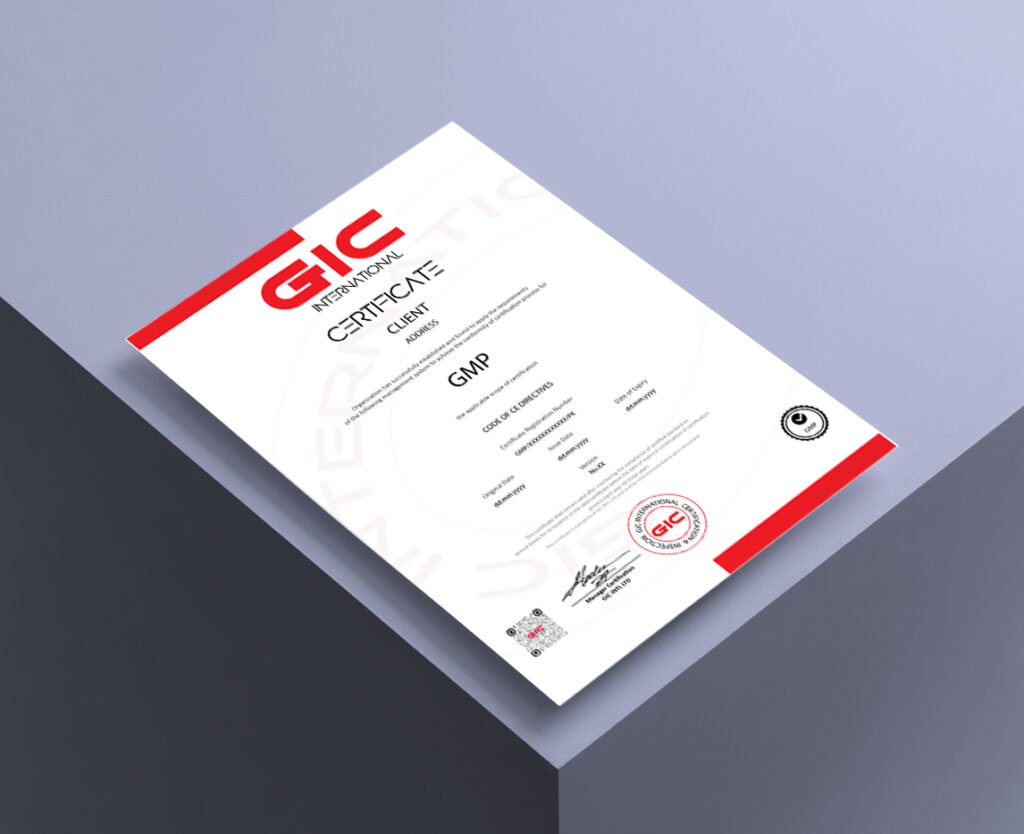
Securing third-party validation does not have to be a slow or complex process. GIC International Certifications provides a clear, efficient pathway to help organizations obtain GMP Certification without unnecessary procedural delays. Utilizing a streamlined approach, GIC International simplifies audit scheduling, document reviews, and site evaluation phases.
The technical proficiency of GIC International Certifications relies on an elite network of lead auditors and accredited safety experts. Their team brings broad multi-sector experience to support project scopes across all manufacturing fields. By matching qualified auditors directly to specific sector requirements, audit evaluations are completed thoroughly, objectively, and rapidly.
| Sector Managed | Service Execution Focus | Proven Success Track Record |
| Pharmaceuticals & Biologicals | Strict auditing of sterile processing, cleanroom environment controls, and air handling systems (HVAC). | 100% Successful Certification Rate |
| Food & Beverage Processing | Specialized hygiene assessments, cross-contamination checks, and process parameter monitoring. | 100% Successful Certification Rate |
| Nutraceuticals & Herbal Goods | Thorough evaluation of active ingredient integrity, raw material validation, and dosage consistency. | 100% Successful Certification Rate |
| Cosmetics & Personal Care | Comprehensive verification of microbial contamination defenses, batch tracking, and packaging sanitization. | 100% Successful Certification Rate |
| Medical Device Manufacturing | Rigorous audits of assembly line environmental controls, component traceability, and material safety. | 100% Successful Certification Rate |
What Is the Expected Timeline and Investment for Certification Projects?
Project timelines and financial investments vary based on facility size, employee count, and operational complexity. GIC International Certifications maintains transparent scheduling along with competitive, budget-friendly pricing structures.
Below is an overview of project timelines and estimated investment brackets in Pakistani Rupees (PKR). (Note: These are estimated market figures and do not represent exact formal quotes).
| Industry Scope / Scale | Typical Assessment Duration | Tentative Investment (PKR) |
| Small-Scale Facility (Local Food/Cosmetics) | 2 to 3 Weeks | PKR 250,000 to PKR 400,000 |
| Medium-Scale Enterprise (Nutraceuticals/Processing) | 3 to 5 Weeks | PKR 450,000 to PKR 650,000 |
| Large-Scale / Complex Plant (Pharma/Medical) | 6 to 8 Weeks | PKR 700,000 to PKR 950,000 |
What Are the Core Operational Pillars Evaluated During Audit Protocols?
Auditors evaluate manufacturing facilities using five primary pillars. These standards ensure comprehensive operational integrity throughout the manufacturing cycle.
1. People (Personnel and Staff Safety)
Every employee working on the production floor must undergo regular training to ensure operational safety and strict hygiene practices. Assessments review handwashing protocols, protective wear requirements, health clearance records, and duty execution clarity.
2. Premises and Equipment Maintenance
Manufacturing facilities must maintain strict environmental controls. Auditors review building design, air quality systems, pest control measures, cleaning logs, and machinery calibration schedules to prevent cross-contamination.
3. Processes and Operational Workflows
All production processes must be clearly defined, standardized, and consistently implemented. Consistency ensures that every batch manufactured matches identical quality specifications, preventing batch-to-batch variations.
4. Products and Raw Material Management
Raw materials, active ingredients, and packaging supplies must be sourced from validated vendors. Storage facilities must maintain proper temperature and humidity controls to prevent material degradation.
5. Procedures and Document Control
Complete documentation is critical for verifiable quality control. Audit standards require clear Standard Operating Procedures (SOPs), complete batch manufacturing records, logbooks, and corrective action histories.
How Does a Validated Facility Maintain Continuous Compliance Status?
Securing a GMP Certification marks the beginning of an ongoing quality assurance process. Certified facilities must consistently maintain these high standards through regular operational reviews and updates.
- Scheduled Internal Audits: Facilities conduct routine internal inspections to identify potential non-conformances before third-party audits occur.
- Regular Staff Refresher Training: Personnel undergo continuous training on updated hygiene standards, safety rules, and operational changes.
- Systematic Equipment Calibration: Production equipment, measurement devices, and environmental monitors must be routinely recalibrated according to set service schedules.
- Comprehensive SOP Updates: Standard operating procedures are continuously refined to adapt to updated global safety standards, production technology upgrades, and industry practices.
What Long-Term Business Advantages Does Compliance Yield?
Investing in structured compliance provides substantial commercial and operational benefits over time.
- Expanded Export Potential: Certified facilities gain streamlined entry into international markets that require strict quality compliance.
- Reduced Operational Waste: Standardized processes minimize product batch failures, material waste, and financial losses.
- Elevated Brand Trust: Displaying an officially accredited quality seal strengthens consumer confidence and supplier credibility.
- Protective Risk Mitigation: Structured workflows help protect companies from expensive product recalls, government shutdowns, and legal liabilities.
FAQ’s
What is the primary purpose of a Good Manufacturing Practice system?
The primary goal ensures that facilities consistently manufacture products under strict quality standards. This proactive system minimizes contamination, product defects, and mislabeling risks that final product testing alone cannot detect.
Which industries require this level of operational certification?
Facilities producing pharmaceuticals, medical devices, foods, beverages, dietary supplements, and cosmetics rely on these standards to guarantee product safety.
Can an individual professional hold this certification?
No, the facility certification applies to manufacturing environments, equipment, and production processes rather than individuals. However, individuals can earn specialized auditor credentials or complete personnel training courses.
How long does the official assessment process usually take?
With an organized verification body like GIC International Certifications, the audit execution and review phases typically range from 2 to 8 weeks, depending on the facility size and operational complexity.
How often must audits be performed to keep the certificate valid?
Certificates are generally valid for 3 years, subject to annual surveillance audits that ensure the facility maintains full compliance over time.