
ISO 9001:2015 Quality Management System (QMS)
In today’s competitive global market, organizations must deliver consistent quality and exceed customer expectations to achieve lasting success. ISO 9001 is the world’s leading international standard for Quality Management Systems (QMS), providing a proven framework for organizations to ensure their products and services reliably meet customer and regulatory requirements. Companies adopt this standard to demonstrate their unwavering commitment to quality, which enhances customer satisfaction, streamlines operations, and drives sustainable growth.
“Explore more about how ISO 9001 can revolutionize quality at GIC International. To turn this strategic advantage into your reality and avail the certification”
Understanding ISO 9001
ISO 9001 Certification provides a robust framework for organizations to establish, implement, maintain, and continually improve a Quality Management System. This standard, developed by the International Organization for Standardization (ISO), outlines the core requirements for a QMS and is built on the principle of process-oriented management. By implementing ISO 9001, GIC International can systematically manage its processes, reduce errors, and enhance overall efficiency, leading to higher customer trust and loyalty.
As the cornerstone of the ISO 9000 family of standards, the primary objective of ISO 9001 Certification is to help organizations consistently provide products and services that meet customer and applicable statutory and regulatory requirements. For a company like GIC International, this means embedding quality into every aspect of its operations, from client onboarding to final service delivery.
Key Elements of ISO 9001
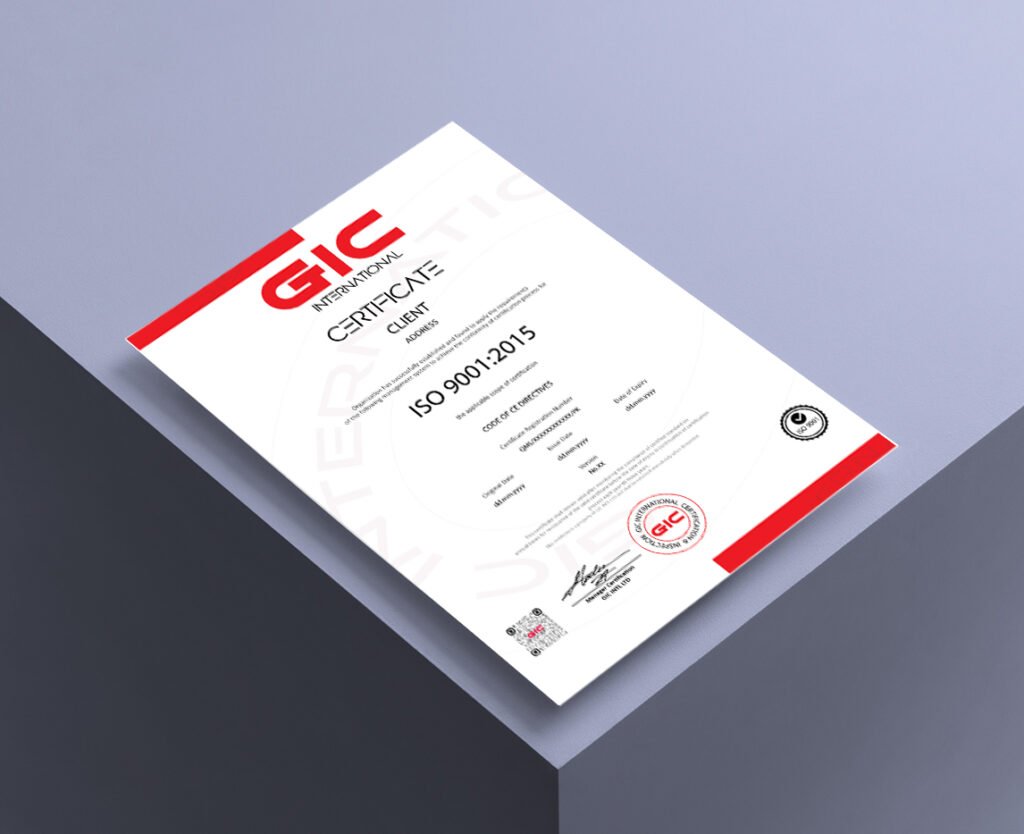
ISO 9001 Certification is structured around several high-level clauses that form the basis of an effective QMS. These elements include:
- Context of the Organization:GIC International must identify its internal and external issues, as well as the needs and expectations of interested parties (like clients, regulators, and partners), that can impact its strategic direction and quality objectives.
- Leadership:Top management at GIC International must demonstrate leadership and commitment by integrating the QMS into business processes, establishing a quality policy, and ensuring roles and responsibilities are assigned and communicated.
- Planning:This involves addressing risks and opportunities that can affect the conformity of products and services. GIC International will set measurable quality objectives at relevant functions and levels to drive improvement.
- Support:The company must provide the necessary resources, ensure personnel are competent, and promote awareness of the quality policy. This also includes managing documented information to support process operations.
- Operation:This is the core of GIC International’s service delivery. It encompasses the planning, design, and control of processes for creating products and services, ensuring they are delivered under controlled conditions.
- Performance Evaluation:GIC International must monitor, measure, and analyze its processes and the satisfaction of its clients. This is achieved through internal audits and regular management reviews of the QMS.
- Improvement:A core principle of ISO 9001 is continual improvement. GIC International will address non-conformities, take corrective actions to prevent recurrence, and continually enhance its QMS performance.
Benefits of ISO 9001 for GIC International
- Enhances Customer Satisfaction
- Systematically ensures that GIC International’s services meet customer requirements.
- Builds strong client relationships and fosters loyalty through consistent, reliable performance.
- Improves Operational Efficiency and Reduces Costs
- Streamlines processes, eliminates redundancies, and minimizes errors and waste.
- Leads to significant cost savings and better resource allocation.
- Provides a Competitive Edge and Enhances Reputation
- The ISO 9001 certification is a globally recognized mark of quality.
- Differentiates GIC International in the marketplace, making it more attractive to potential clients and partners.
Challenges in Implementing ISO 9001
Implementing ISO 9001 can present challenges for any organization. A common hurdle is cultural resistance, as employees may be accustomed to existing workflows. GIC International can overcome this through strong leadership, clear communication, and comprehensive training that emphasizes the personal and organizational benefits.
Another challenge is the initial investment of time and resources to document processes and establish the system. However, this should be viewed as a strategic investment. The long-term gains in efficiency, customer retention, and market reputation far outweigh the initial costs, and the structured framework actually reduces fire-fighting in the long run.
ISO 9001 and Continuous Improvement
Continuous improvement is the engine of the ISO 9001 standard. It ensures that GIC International doesn’t just maintain its quality standards but consistently elevates them. This involves setting increasingly ambitious quality objectives, learning from audits and performance data, and proactively seeking opportunities for enhancement.
The Plan-Do-Check-Act (PDCA) cycle is embedded throughout the standard, providing a logical, iterative method for managing processes and driving improvement. By fostering this culture, GIC International can adapt to market changes and evolving customer needs with agility and confidence.
Real-World Applications for GIC International
For a company like GIC International, operating in a sector where trust, accuracy, and reliability are paramount, ISO 9001 is exceptionally relevant. It can be applied to:
- Service Delivery Processes:Standardizing and improving core services to ensure consistency and accuracy for every client.
- Client Relationship Management:Systematically handling client feedback, requirements, and complaints to enhance satisfaction.
- Risk Management:Identifying and mitigating potential risks in service delivery and operational processes.
- Internal Management:Improving internal communication, decision-making, and strategic planning.
ISO 9001 is more than a certificate; it is a strategic tool that empowers GIC International to build a world-class quality culture. By implementing this standard, GIC International can solidify its operational excellence, demonstrate an unwavering commitment to its clients, and secure a formidable competitive advantage. Embracing ISO 9001 Certification is a definitive step toward achieving organizational excellence and long-term leadership in the industry.