


HACCP Certification
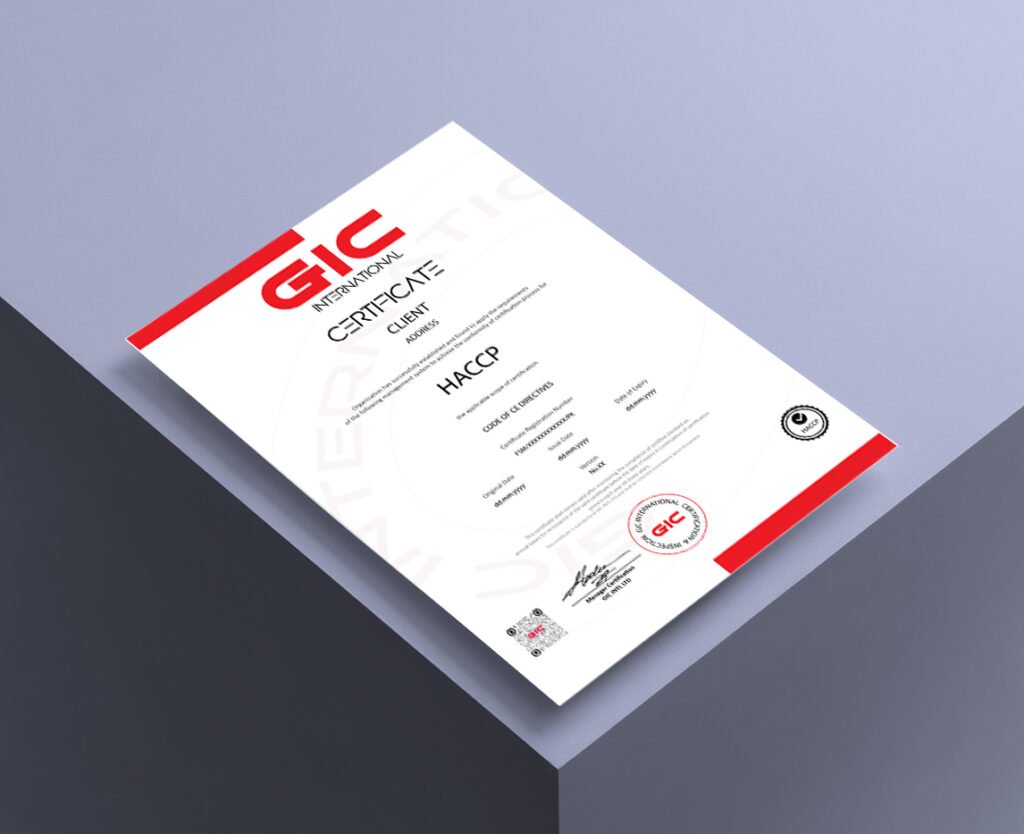
In today’s global food and product supply chains, consumer safety is the highest priority. HACCP is a systematic, internationally recognized preventive approach to food safety that identifies, evaluates, and controls biological, chemical, and physical hazards. For organizations like GIC International, achieving HACCP certification demonstrates an unwavering commitment to producing safe goods, which builds customer trust, ensures regulatory compliance, and secures market access.
“Given below is more detail about HACCP – a foundational food safety standard, and you might be interested in learning more about it. For the rest of the process, you can avail the certification from GIC International to make your organizational dream a reality by contacting us”
Understanding HACCP
HACCP Certification provides a structured framework for organizations to establish a proactive food safety management system. Unlike traditional end-product testing, HACCP focuses on preventing hazards before they occur. The system, developed through a collaboration between NASA, the Pillsbury Company, and the U.S. Army Laboratories, outlines rigorous requirements for controlling processes that directly impact safety. Companies using HACCP can systematically identify potential hazards, implement critical control measures, and ensure the consistent production of safe products.
HACCP Certification is a core component of global food safety standards and is often a prerequisite for other certifications like ISO 22000. The primary objective of HACCP is to provide organizations with a science-based approach to manage their food safety responsibilities. By implementing this system, companies can achieve a significant reduction in safety incidents and demonstrate their commitment to consumer protection.
Key Principles of HACCP
HACCP is built upon seven core principles that organizations must follow to implement an effective food safety plan. These principles include:
- Conduct a Hazard Analysis:Identify potential biological, chemical, or physical hazards that could reasonably occur in the product and process.
- Determine the Critical Control Points (CCPs):Identify the points, steps, or procedures in the process where control can be applied to prevent, eliminate, or reduce a food safety hazard to an acceptable level.
- Establish Critical Limits:Set the maximum and/or minimum value (e.g., temperature, time, pH, moisture level) to which a biological, chemical, or physical parameter must be controlled at a CCP.
- Establish Monitoring Procedures:Define a sequence of observations or measurements to ensure each CCP is under control and within its critical limits.
- Establish Corrective Actions:Plan the actions to be taken when monitoring indicates a deviation from an established critical limit.
- Establish Verification Procedures:Use methods, procedures, and tests, including auditing and random product sampling, to confirm that the HACCP system is working effectively.
- Establish Record-Keeping and Documentation Procedures:Maintain detailed records that document the HACCP plan, including the hazard analysis, CCPs, critical limits, and monitoring records.
Benefits of HACCP
- Ensures Product Safety and Quality
- Systematically prevents and controls food safety hazards.
- Reduces the risk of product recalls and consumer illness.
- Enhances Market Access and Credibility
- Demonstrates a fundamental commitment to food safety.
- Is often a mandatory requirement for major retailers, distributors, and export markets.
- Builds trust with consumers, regulators, and business partners.
- Ensures Compliance with Legal and Regulatory Requirements
- Helps organizations comply with national and international food safety laws and regulations.
- Reduces the risk of legal action, fines, and penalties.
HACCP and Continuous Improvement
Continuous improvement is embedded in the HACCP principles through verification and review. Organizations that adopt this mindset can enhance their food safety performance over time and adapt to new hazards or changes in their processes. Continuous improvement involves regularly reviewing monitoring records, re-validating the HACCP plan, and implementing corrective actions to address any deviations.
The HACCP framework itself is a model of prevention and control, facilitating a proactive culture. By committing to this cycle of verification and improvement, organizations can achieve long-term food safety excellence and business resilience.
Real-World Applications of HACCP
HACCP Certification is applicable to all segments of the food industry, from farm to fork. For example, food manufacturers use HACCP to control hazards in processing, while restaurants and catering services use it to ensure safe food preparation and handling.
Beyond food, HACCP principles are also applied in the pharmaceutical and cosmetic industries to ensure product safety. Small and medium-sized enterprises (SMEs) can significantly benefit from HACCP, as it provides a scalable framework that can be tailored to the specific needs and risks of any operation. By adopting HACCP, SMEs can improve their safety standards, gain credibility, and compete more effectively in the market.
HACCP certification is a powerful tool for any organization committed to product safety and quality. By implementing this system, companies can proactively prevent hazards, comply with stringent regulatory requirements, and build an impeccable reputation. Despite the challenges associated with implementation, the benefits of HACCP including reduced risk, enhanced consumer confidence, and market access far outweigh the costs. With a strong commitment to food safety principles and ongoing improvement, organizations can achieve long-term success and sustainability. Whether you are a large corporation or a small business, embracing HACCP with GIC International can transform your safety management practices and drive your organization towards excellence.