
CE MARK Certification
The CE MARK Certification serves as the ultimate passport for manufacturers intending to trade commercial products within the European Economic Area (EEA). Affixing this conformity mark declares that an item complies with stringent European Union health, safety, and environmental protection standards. Beyond being a strict statutory obligation across 30 European states, securing this verification validates product safety, enhances brand trust, and eliminates regional trade obstacles, enabling frictionless product distribution throughout global supply chains.
Understanding the structural mechanics of European conformity ensures that businesses remain compliant while expanding their international market share. A streamlined certification journey requires evaluating relevant European Directives, executing precise technical file compilation, ensuring harmonized standard alignment, and conducting reliable laboratory testing. Navigating these procedural layers efficiently allows organizations to bypass costly regulatory delays, market delisting, or customs holds, ensuring rapid commercial placement.
Key Summary of Essential Directives and Compliance Mechanics
- Core Scope: Mandatory legal conformity mark enabling free movement of goods across all 30 EEA member states.
- Primary Directives: Encompasses Low Voltage (LVD), Electromagnetic Compatibility (EMC), Machinery Safety, Personal Protective Equipment (PPE), and Medical Device Regulations (MDR).
- Essential Requirements: Technical Documentation File (TDF), Risk Assessment, Harmonized Standard Verification, and EU Declaration of Conformity (DoC).
- Market Advantage: Prevents trade friction, enhances credibility, mitigates product liability risks, and drives international expansion.
Why Is CE MARK Certification Crucial for Global Business Growth?
Securing legal approval to market products inside Europe opens direct commercial pathways to hundreds of millions of consumers. Regulatory compliance is not merely an administrative hurdle; it serves as a distinct commercial differentiator that reassures buyers, B2B distributors, and regulatory bodies that a product operates without posing environmental or health hazards.
- Unrestricted Single-Market Access: Allows products to move freely across all European Union and European Free Trade Association nations without facing individual country-by-country regulatory approvals.
- Risk and Liability Reduction: Proves that severe risk assessments and technical safety protocols were executed, safeguarding organizations against liability claims and costly product recalls.
- Enhanced Commercial Trust: B2B distributors and enterprise buyers prioritize vendors that maintain verified technical documentation and verified safety credentials.
- Global Quality Alignment: Aligning product development with European harmonized standards naturally raises manufacturing standards, making global export compliance easier to achieve.
How Does GIC International Certifications Accelerate the Certification Journey?
GIC International Certifications operates as an established global certification body staffed by highly experienced lead auditors and professional accredited auditors. Organizations often run into friction when attempting to decipher complex EU directives, but GIC International Certifications streamlines the evaluation, audit, and assessment phases via robust certification services.
By assigning sector-specific accredited lead auditors who understand the technical nuances of various product directives, GIC International Certifications conducts rigorous, fair, and efficient conformity evaluations. Their deep expertise across diverse industries minimizes review loops and accelerates final certification outcomes without compromising compliance integrity.
GIC International Certifications Engagement Matrix Across Sectors
| Industry Sector | Applied EU Directives & Standards | Audit Focus & Assessment Efforts | Certification Result Outcome |
| Electrical & Electronics | Low Voltage Directive (LVD) & EMC Directive | Verification of electrical safety assessments, electromagnetic compatibility reports, and circuit documentation. | 100% Successful Assessment |
| Industrial Machinery | Machinery Directive (MD) & Outdoor Noise Directives | Rigorous evaluation of mechanical risk assessments, safety guarding mechanisms, and operational emergency controls. | 100% Successful Assessment |
| Medical Devices | Medical Device Regulation (MDR) | Detailed review of clinical evaluations, quality management systems (ISO 13485), and post-market surveillance plans. | 100% Successful Assessment |
| Personal Protective Equipment | PPE Regulation | Assessment of material protective thresholds, ergonomic user evaluations, and safety instruction compliance. | 100% Successful Assessment |
| Wireless & Telecom Devices | Radio Equipment Directive (RED) | Review of radio spectrum usage, signal interferences, and combined electrical safety specifications. | 100% Successful Assessment |
What Are the Steps to Obtain CE MARK Certification Swiftly?
Achieving European product compliance follows a structured, multi-phase technical roadmap. When supported by qualified certification services, businesses can efficiently progress through each regulatory checkpoint.
1. Applicable Directive Identification
Every product category falls under specific EU legislation. Manufacturers must determine whether their item requires compliance under single or multiple directives (e.g., a smart home appliance may trigger LVD, EMC, and RED simultaneously).
2. Standard and Risk Evaluation
Manufacturers identify relevant harmonized standards (EN standards) and conduct a comprehensive risk assessment. This step isolates potential electrical, mechanical, or chemical hazards and documents mitigation actions built into the product design.
3. Technical File Compilation
A Technical Documentation File (TDF) must be constructed and held for at least 10 years. This file contains technical drawings, circuit designs, bills of materials, user manuals, risk evaluations, and test reports.
4. Third-Party Audit and Certification Assessment
For products requiring third-party evaluation or Notified Body involvement, accredited auditors perform technical reviews and facility assessments to confirm that manufacturing processes consistently meet regulatory expectations.
5. Issuance of Declaration of Conformity and Marking
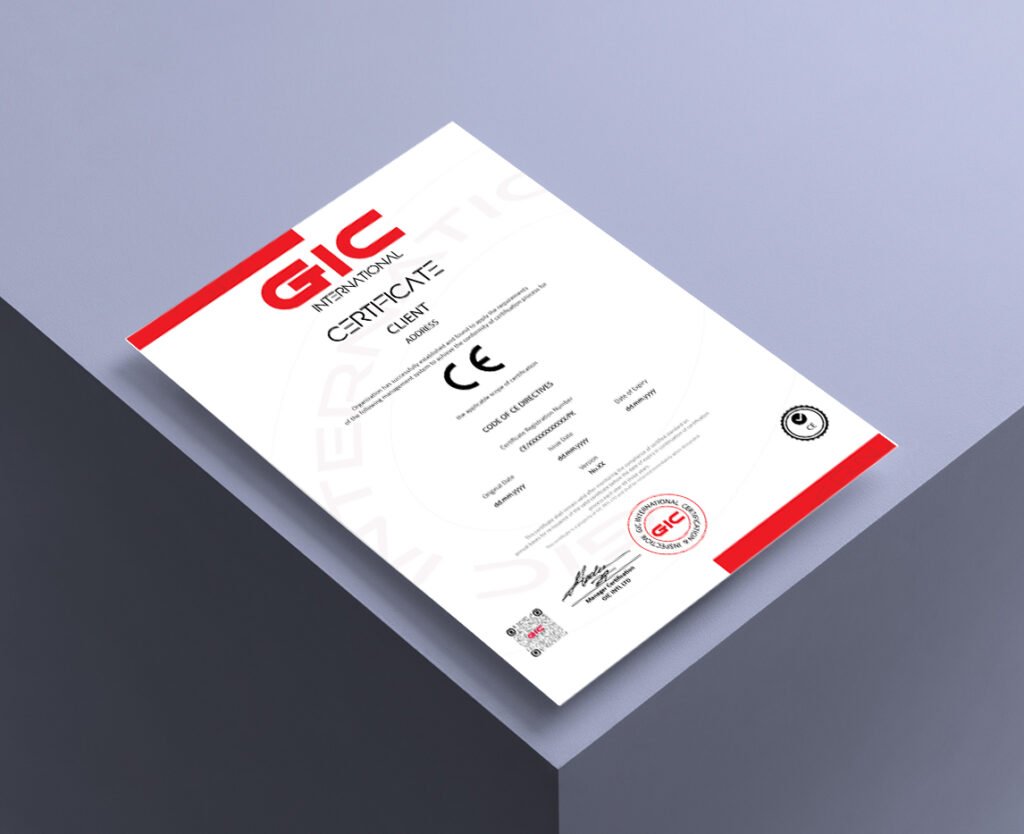
Upon successful compliance verification, the manufacturer signs the official EU Declaration of Conformity (DoC) and affixes the CE Mark to the product, packaging, or data plate.
What Are the Project Timelines and Estimated Costs?
Project schedules and financial investments vary based on product complexity, risk categorization, and required directive reviews. Below is a indicative timeline and economical cost structure provided in Pakistani Rupees (PKR) to give a clear budgetary baseline.
Estimated Timelines and Project Investments
| Product Category & Scope | Complexity & Risk Profile | Tentative Project Timeline | Indicative Investment (PKR)* |
| Basic Consumer Electronics | Low Risk (Standard DC/Battery Powered) | 2 to 4 Weeks | 180,000 PKR – 350,000 PKR |
| AC Industrial / Commercial Equipment | Medium Risk (Standard AC Power & Machinery) | 4 to 8 Weeks | 380,000 PKR – 750,000 PKR |
| Wireless & Smart Radio Products | Medium-High Risk (RED Directive Alignment) | 6 to 10 Weeks | 650,000 PKR – 1,200,000 PKR |
| Complex Industrial Machinery | High Risk (Heavy Industry & Automated Systems) | 8 to 14 Weeks | 1,100,000 PKR – 2,200,000 PKR |
| Specialized Devices / High-Risk Equipment | Critical Risk Category (Requires Specialized Evaluation) | 12 to 20 Weeks | 2,500,000 PKR – 5,000,000 PKR |
*Note: These are not exact prices. Final fees depend on specific technical testing requirements, directive combinations, and scope complexity.
What Technical Expertise Does GIC International Certifications Bring?
Navigating complex international standards demands auditors who possess technical command over evolving global regulations. GIC International Certifications relies on an elite network of lead auditors and accredited subject-matter experts who bring deep industrial knowledge to every evaluation project.
- Lead Auditor Competency: Audits are conducted by certified lead auditors with hands-on sector experience across mechanical, electrical, medical, and industrial domains.
- Accredited Audit Teams: Assessment groups maintain up-to-date credentials under internationally recognized accreditation frameworks.
- Sector-Specific Guidance: Technical specialists carefully assess product documentation to verify that harmonized standards are interpreted and applied correctly.
- Transparent Verification Processes: Streamlined, objective audit protocols keep projects moving smoothly while ensuring complete regulatory integrity.
Partnering with an experienced certification provider allows manufacturing organizations to turn compliance into a straightforward, predictable business milestones.
FAQ’s
Is CE MARK Certification mandatory for all products sold in Europe?
No, it is mandatory only for product categories governed by specific EU directives (e.g., electronics, machinery, toys, medical devices, personal protective equipment). Products outside these directives do not carry the mark.
How long does a CE MARK Certification remain valid?
The certification and Declaration of Conformity generally remain valid as long as the product design, manufacturing process, and relevant harmonized standards do not undergo significant updates or changes.
What is the difference between self-declaration and third-party certification?
Low-risk products often allow manufacturers to issue a self-declaration of conformity. Higher-risk categories require third-party assessment and verification from an accredited body or Notified Body.
What happens if a business sells non-compliant products in the EEA?
Non-compliant items face immediate market removal, customs holds, severe financial penalties, marketplace delisting, and legal product liability consequences.