
ISO 15378 Primary Packaging Materials for Medicinal Products
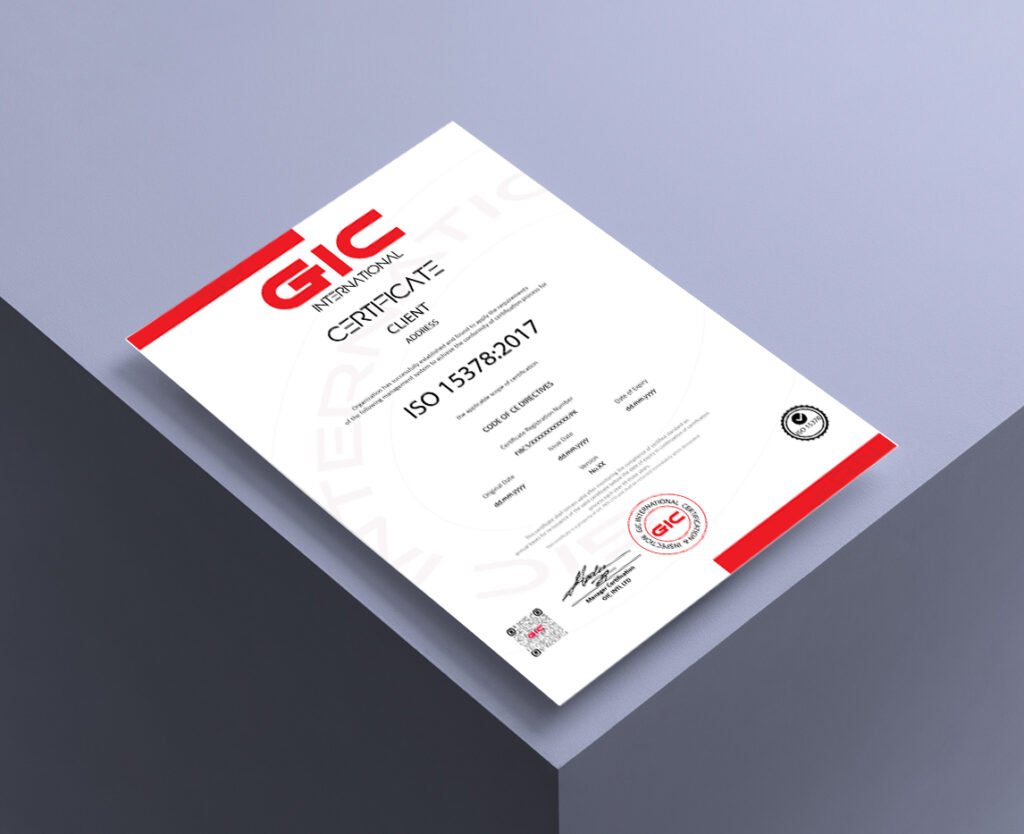
ISO 15378 Certification specifies the mandatory Quality Management System (QMS) requirements for manufacturers of primary packaging materials used directly in medicinal products and medical devices. By embedding Good Manufacturing Practice (GMP) principles into the ISO 9001 baseline framework, this international standard ensures that packaging components, such as glass, rubber, plastics, and aluminum, maintain direct chemical stability and biological safety. Achieving ISO 15378 Certification allows packaging producers to validate contamination control, strict batch traceability, and regulatory compliance across global pharmaceutical supply chains.
Securing an ISO 15378 Certification validates that an organization adheres strictly to critical risk management standards, environment-controlled manufacturing, and complete deviation control. This comprehensive certification framework streamlines third-party audit readiness, mitigates product liability risks, and builds operational trust between packaging providers and global pharmaceutical manufacturers.
- Core Focus: Quality Management System (QMS) integrated with Good Manufacturing Practice (GMP) specifically tailored for primary pharmaceutical packaging materials.
- Primary Applicable Materials: Glass containers, rubber stoppers, plastic bottles, aluminum tubes, blister foils, and laminate films coming into direct contact with drugs.
- Crucial Control Elements: Contamination control, environmental monitoring, process validation, risk assessments, and full material-to-product batch traceability.
- Key Strategic Benefits: Fast-tracks global market access, reduces client audit redundancy, lowers rejection rates, and ensures full compliance with global regulatory standards.
- Auditing Protocol: Independent two-stage assessment covering complete documentation verification (Stage 1) and on-site operational performance verification (Stage 2).
Why Is ISO 15378 Certification Vital for Packaging Manufacturers?
Primary packaging materials are in direct contact with active pharmaceutical ingredients (APIs) and finished drug formulations. Any degradation, contamination, or chemical interaction between the packaging medium and the medicinal product can compromise patient safety and lead to massive product recalls.
Obtaining an ISO 15378 Certification provides explicit operational evidence that a manufacturer operates under stringent environmental controls, robust cleanroom protocols, and failure-proof hazard identification strategies. It elevates a manufacturing facility from a basic supplier to an accredited primary partner for global pharmaceutical brands.
What Key Requirements Are Specified Under ISO 15378?
The framework builds on the high-level ISO 9001 structure while weaving in pharmaceutical-grade GMP expectations. Core mandatory focus areas include:
- Contamination Prevention & Hygiene: Environmental monitoring, particulate control, cleanroom maintenance, and strict personnel hygiene protocols.
- Full Batch Traceability: Systems that track raw materials, production parameters, operator interactions, and distribution down to every individual production lot.
- Validation & Deviation Management: Qualification of cleanroom infrastructure, automated inspection equipment, software validation, and rigorous Corrective and Preventive Action (CAPA) routines.
- Risk Management: Implementation of proactive risk assessment tools (such as FMEA) to address process hazards before commercial release.
How Does GIC International Certifications Expedite ISO 15378 Certification?
Navigating the evaluation landscape for specialized medical standards requires efficient, highly structured assessment services. GIC International Certifications enables organizations to achieve their target ISO 15378 Certification through a clear, direct, and streamlined certification audit process.
Instead of dealing with overly complex corporate delays, GIC International Certifications provides direct scheduling, swift documentation reviews, and highly competent assessment procedures. Their independent verification model ensures that manufacturers experience zero unnecessary downtime while satisfying global compliance benchmarks.
Certification Assessment Execution Plan by GIC International Certifications
The structured certification workflow delivered by GIC International Certifications operates through structured operational milestones:
What Are the Tentative Timelines and Price Structures for Certification?
GIC International Certifications maintains an economical, transparent fee model designed to align with market trends while keeping investment requirements reasonable.
(Note: The timelines and prices listed below are tentative estimates for planning purposes and do not represent exact quote figures. Project variables depend on facility size, employee counts, cleanroom complexity, and operational scope.)
What Technical Expertise Does GIC International Certifications Bring?
The success rate of certification assessments relies heavily on the qualifications of the auditing body. GIC International Certifications deploys teams of highly experienced lead auditors and professionally accredited technical experts who specialize in pharmaceutical packaging parameters, cleanroom engineering, and GMP regulations.
These auditor teams possess decades of combined experience across various manufacturing sectors. Their domain-specific insights ensure that the certification audit focuses on real risk factors, continuous operational improvement, and seamless compliance validation. By maintaining a 100% successful result record for compliant organizations across various sectors, GIC International Certifications stands out as a reliable partner for standard-related projects.
How Does ISO 15378 Compare to Other Quality Management Systems?
While standard QMS frameworks provide broad management structures, ISO 15378 is explicitly tailored for the high-risk environments of healthcare packaging.
What Steps Should Organizations Take to Prepare for an Assessment?
To prepare effectively for a seamless certification assessment, companies should focus on establishing clear internal controls:
- Perform an Internal Gap Audit: Compare existing production practices against ISO 15378 clauses.
- Refine Environmental Monitoring: Ensure cleanrooms meet required particulate and microbiological limits.
- Validate Infrastructure & Processes: Confirm equipment cleaning routines, process parameters, and software validations are documented.
- Train Operational Personnel: Verify that technicians and cleanroom workers thoroughly understand GMP and hygiene practices.
- Engage Certification Services: Schedule Stage 1 and Stage 2 independent assessments with GIC International Certifications.
FAQ’s
What is the valid lifespan of an ISO 15378 Certificate?
An ISO 15378 Certificate is valid for three years from the date of issuance. To keep the certification active, organizations undergo brief annual surveillance audits during years one and two, followed by a re-certification assessment in year three.
Who requires ISO 15378 Certification?
Any manufacturer, converter, or printer producing primary packaging materials that come into direct contact with medicinal products or medical devices benefits from certification. This includes suppliers of glass vials, ampoules, rubber closures, blister packs, plastic bottles, and aluminum tubes.
Can ISO 15378 Certification be integrated with ISO 9001?
Yes. ISO 15378 is built directly upon the High-Level Structure (HLS) of ISO 9001. Facilities that already maintain an ISO 9001 system can seamlessly combine their audit programs to reduce operational friction and administrative overhead.
Why are GMP principles mandatory within ISO 15378?
Good Manufacturing Practices (GMP) prevent product contamination, cross-contamination, mix-ups, and labeling errors. Because primary packaging comes into direct contact with drugs, applying GMP to packaging manufacturing is essential for protecting end-user safety.
How quickly can GIC International Certifications process an application?
Depending on the organization’s current readiness and cleanroom documentation state, GIC International Certifications offers fast-track assessment schedules that can complete Stage 1 and Stage 2 audits within 3 to 8 weeks.