

Halal Certification
What is Halal Certification and why is it essential for modern enterprises? Obtaining a Halal Certificate validates that an organization’s products, services, and processing systems conform strictly to Islamic dietary laws, ethical sourcing, and global quality benchmarks. Achieving this verification guarantees that every step of manufacturing from raw material extraction to final packaging remains pure, safe, and entirely free from non-compliant substances.
Halal verification acts as a strategic trust factor for consumer markets across the globe. Beyond fulfilling religious compliance, it ensures superior hygiene, standardized operational control, supply chain traceability, and heightened food safety across consumer sectors. Implementing robust Halal management systems positions businesses to unlock high-growth international trade corridors and capture market share among millions of quality-conscious consumers.
Key Core Features of Halal Compliance
- Traceable Supply Chain Sourcing: Comprehensive audit of all raw materials, ingredients, processing aids, and supplier origins to prevent cross-contamination.
- Standardized Operational Hygiene: Execution of strict sanitation, machine cleaning, and facility protocols meeting both Shariah and global quality guidelines.
- Third-Party Accredited Verification: Independent evaluation and audit verification conducted by experienced, qualified technical and technical-Shariah lead auditors.
- Universal Market Eligibility: Strategic access to key domestic and international export markets demanding verified compliance standards.
What makes Halal compliance a vital growth driver for modern industries? Demand for verified products spans food production, beverages, pharmaceutical manufacturing, cosmetics, logistics, and hospitality. Establishing a verifiable framework builds credibility, reduces operational risk, and fosters consumer trust. Organizations seeking structured compliance partner with accredited certification bodies to navigate evaluation frameworks smoothly.
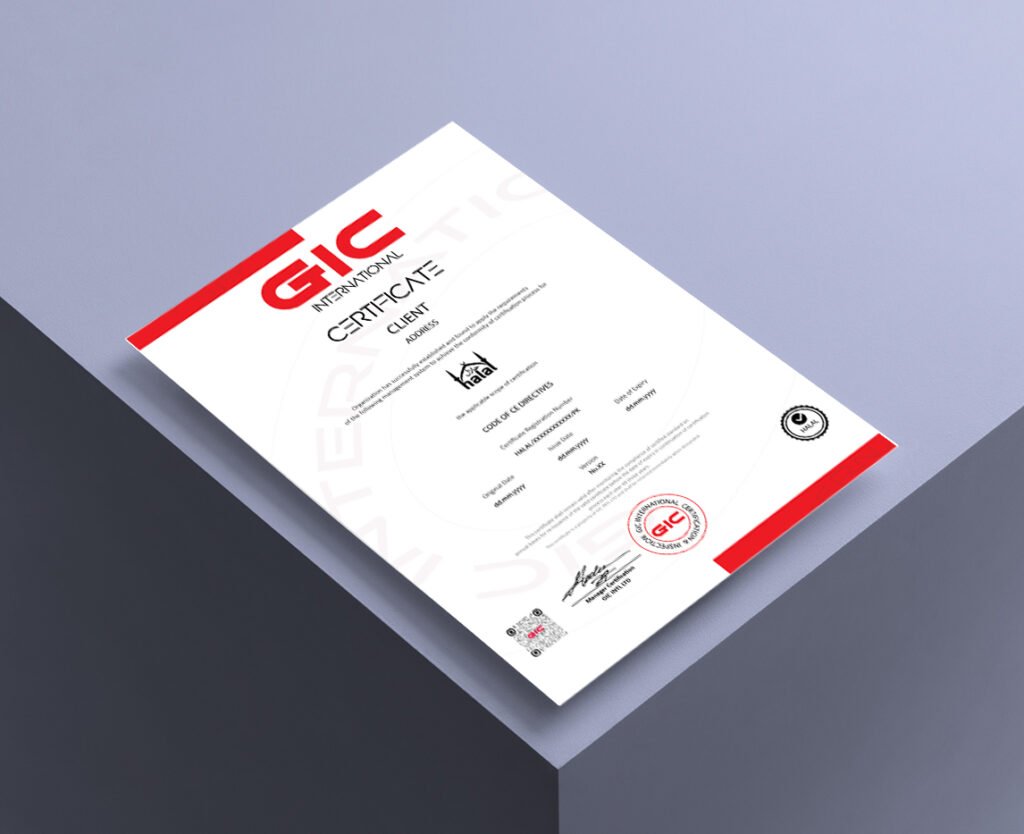
How Does GIC International Certifications Facilitate the Assessment Path?
GIC International Certifications directly delivers independent assessment and verification services designed to confirm organizational compliance without unnecessary operational delay. Operating strictly as an accredited certification body, GIC International Certifications executes rigorous, streamlined audits to verify that company procedures adhere to applicable Halal standards.
The certification workflow removes administrative complexity by focusing on precise, efficient audit execution. Qualified auditors handle each phase directly evaluating documentation, conducting on-site verifications, and confirming corrective actions to deliver dependable certification outcomes.
Systematic Auditing Efforts Employed by GIC International Certifications
| Operational Phase | Specific Audit Actions Handled | Compliance Objective Delivered |
| 1. Application Review & Scope Mapping | Verification of organizational scale, facility locations, raw material counts, and target sectors. | Defines a clear assessment boundary and audit depth. |
| 2. Stage-1 Documentation Audit | Detailed review of raw material lists, supplier declarations, processing flowcharts, and hygiene policies. | Identifies documentation gaps early to streamline physical site visits. |
| 3. Stage-2 On-Site Verification | Physical inspection of processing lines, storage facilities, equipment cleaning, and handling practices. | Confirms real-world compliance and prevents cross-contamination risks. |
| 4. Technical Evaluation & Decision | Review of complete audit findings and verification evidence by an independent certification board. | Assures transparent, impartial, and 100% compliant certification decisions. |
| 5. Certificate Issuance & Surveillance | Final issuance of the official Halal Certificate followed by scheduled annual surveillance audits. | Secures ongoing validity and uninterrupted market participation. |
Through focused assessment procedures, GIC International Certifications supports businesses across all commercial sectors in reaching 100% successful evaluation outcomes while upholding standard integrity.
What are the Tentative Timelines and Project Costs for Certification?
The duration and cost of an assessment project depend on business scale, operational complexity, raw material count, and facility locations. GIC International Certifications maintains an economical pricing structure compared to general market trends, ensuring accessible, cost-effective verification for enterprises.
Note: The prices and durations listed below are tentative estimates for planning purposes and do not represent exact binding quotes.
Estimated Timeline and Cost Breakdown (PKR)
| Business Sector & Scale | Project Scope Overview | Tentative Timeline | Estimated Pricing (PKR) |
| Micro Business / Small Unit | Single facility, up to 5 simple products, basic processing. | 2 to 3 Weeks | PKR 45,000 – PKR 75,000 |
| Small Food & Beverage Enterprise | Single facility, up to 15 products, standardized raw materials. | 3 to 4 Weeks | PKR 80,000 – PKR 120,000 |
| Medium Manufacturing Facility | Multi-line processing, up to 50 raw materials, regional distribution. | 4 to 6 Weeks | PKR 130,000 – PKR 190,000 |
| Large Industrial / Multi-Site Operations | Complex processing lines, extensive product ranges, global export focus. | 6 to 8 Weeks | PKR 200,000 – PKR 350,000 |
| Logistics, Hospitality & Services | Warehousing, transport fleet, or food service operations. | 3 to 5 Weeks | PKR 70,000 – PKR 140,000 |
What Technical Expertise Does GIC International Certifications Bring to Standard Projects?
Successfully verifying compliance across diverse industries requires deep technical knowledge and extensive practical experience. GIC International Certifications maintains a team of qualified lead auditors and sector-specific experts who bring technical clarity to every assessment project.
Core Competencies of Audit Teams
- Professionally Accredited Lead Auditors: Audits are planned and executed by certified lead auditors with extensive field experience across food safety, chemical analysis, and quality management systems.
- Shariah & Technical Subject Experts: Assessment teams combine industrial technical knowledge with deep expertise in Shariah compliance guidelines, ensuring comprehensive evaluation of raw materials and processes.
- Sector-Specific Knowledge: Auditors bring specialized experience across food production, beverages, pharmaceuticals, cosmetics, and logistics, applying relevant audit criteria to each industry.
- Transparent Evaluation Framework: The auditing methodology focuses on clear findings, objective verification, and direct communication, helping organizations resolve non-conformances efficiently.
Why is Certification Vital Across Diverse Industrial Sectors?
Applying Halal management principles offers distinct operational benefits to businesses across multiple economic sectors:
- Food Processing & Consumer Beverages: Guarantees that ingredients, processing aids, and packaging materials remain free from non-compliant substances, strengthening domestic consumer trust and export readiness.
- Pharmaceuticals & Healthcare Products: Validates that active ingredients, capsule shells, and inactive excipients meet strict purity standards.
- Cosmetics & Personal Care: Assures consumers that emulsifiers, fats, fragrances, and active compounds derive entirely from permissible sources.
- Logistics, Storage & Supply Chain: Verifies that transport vehicles, storage facilities, and handling practices maintain strict separation between certified goods and non-compliant items.
FAQ’s
What is the primary purpose of obtaining a Halal Certificate?
A Halal Certificate provides independent verification that an organization’s products, services, and processing methods meet strict Islamic compliance guidelines, quality standards, and safety requirements.
How long does the entire certification evaluation process take?
For most small-to-medium businesses, the audit and evaluation timeline spans between 2 to 6 weeks, depending on documentation readiness, facility scale, and raw material complexity.
How does GIC International Certifications support the audit process?
GIC International Certifications provides direct, accredited assessment services. Qualified lead auditors handle documentation reviews, on-site inspections, and final evaluation reports to deliver smooth, efficient certification outcomes.
Are the listed project prices fixed or tentative?
The prices mentioned are tentative estimates designed to offer an economical reference compared to standard market rates. Final assessment fees are customized based on product scope, facility size, and raw material counts.
How long remains a Halal Certificate valid after issuance?
Certificates are generally valid for 1 to 3 years, subject to annual surveillance audits that confirm ongoing operational compliance.
Can non-food sectors apply for certification?
Yes. Sectors including pharmaceuticals, cosmetics, personal care, packaging, warehousing, and hospitality can achieve full certification.